Orthodontics – Braces
What is Orthodontics or Braces?
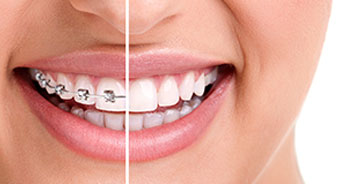
Orthodontics includes cosmetic dentistry; when the patient’s aim is to improve his/her appearance. Orthodontics includes treating and controlling different aspects of facial growth and the shape and development of the jaw. Orthodontics used to be called orthodontia – the word comes from the Greek orthos, meaning “straight, perfect or proper”, and dontos, which means “teeth”.
Orthodontics help in:
- Closing wide gaps between the teeth
- Making sure the tips of the teeth are aligned
- Straightening crooked teeth
- To improve speech or eating (oral function)
- To improve the long-term health of gums and teeth
- To prevent long-term excessive wear or trauma (of the teeth)
- Treating an improper bite
Contact Us
Call us today
We are now accepting new patients!
(416) 931-3368
What is malocclusion?
Malocclusion means bad bite.
Some peoples jaws and teeth do not develop properly. When we say bad bite we mean not only crooked, misaligned teeth but as well a fault in the relation between the bottom and top set of teeth (the two dental arches). This may develop because of injury to the teeth or facial bones, frequent thumb sucking, or for reasons unknown.
Thumb sucking (or finger sucking) can result in localized deformation of the teeth and supporting bone. In order to restore a natural improvement, the thumb sucking habit has to be stopped.
Malocclusion may impact on the shape of the person’s face and the appearance of their teeth, which can lead to embarrassment, a lack of self-confidence, and even depression. Severe malocclusion may affect eating, speech and keeping the teeth clean.
People may require orthodontic treatment for different problems:
- The front teeth protrude – treatment not only improves the patient’s appearance, but also protects the teeth from damage; people with protruding front teeth are more likely to injure them in sports, falling down, etc.
- Crowding – if the patient’s jaw is narrow, there may not be enough space for all the teeth. In such cases the orthodontist may have to remove one or more teeth to make room for the others.
- Impacted teeth – as the adult teeth come through, they are not in the right position
- Asymmetrical teeth – the upper and lower teeth do not match, especially when the mouth is closed but the teeth are showing.
- Deep bite (overbite) – when the teeth are clenched, the upper ones come down over the lower ones too much
- Reverse bite – when the teeth are clenched, the upper teeth bite inside the lower ones
- Open bite – when the teeth are clenched, there is an opening between the upper and lower teeth.
- Underbite – the upper teeth are too far back, or the lower teeth a too far forward (“bulldog” appearance)
- Crossbite – at least one of the upper teeth does not come down slightly in from of the lower teeth when the teeth are clenched; they are too near the cheek or the tongue
- Spacing – there are gaps or spaces between the teeth, either because a tooth is missing, or the teeth simply do not fill-up the mouth (opposite of crowding)
When can orthodontic treatment start?
The choice to change your dental amalgams should not be taken seriously. What you need to consider is the choice of replacement material. There are two primary alternatives:
Usually orthodontic treatment can start about 12-13 years of age. The adult teeth have to be present and fully developed.
Children with a cleft lip and palate may require orthodontic treatment before their adult teeth have developed completely.
Good oral hygiene is essential before any orthodontic work can begin and is vital after it has begun. Patients with braces have to brush more carefully and more often and have to be seen by a hygienist every 3 months to prevent tooth decay while treatment is ongoing.
Assessment – We will assess the state of the patient’s teeth and make a prediction on how they are likely to develop without treatment. We will need the following diagnostic tools before treatment can begin.
- A full medical and dental health history
- A clinical examination
- X-rays of the teeth and jaw
- Possible CTScan
- Pictures of the mouth and face
- Plaster models of the teeth
If you’re considering braces or orthodontic treatment, schedule a consultation to explore your options and create a healthier, more confident smile.